




How to Choose the Perfect Wrought Iron Gate: A Guide to Beauty, Security, and Durability
A wrought iron gate is more than just an entry point; it's a statement piece that defines the first impression of your property. It combines timeless elegance with robust security, offering a unique blend of form and function. Whether for a grand driveway, a cozy garden, or a stylish front entry, selecting the right gate requires careful consideration. This guide will walk you through the essential steps to make an informed decision.
1. Define Your Primary Purpose & Location
The gate's intended role dictates its design and construction.
- Security & Privacy: For driveways or perimeter walls, prioritize strength, height, and minimal gaps. Consider adding features like spear tops, closer picket spacing, or integrated solid panels (wood or metal).
- Aesthetic & Curb Appeal: For gardens or decorative entries, focus on ornamental design. Scrolls, floral motifs, and intricate patterns can create a focal point. Lighter, more open designs are suitable here.
- Safety (Pool Gates): This is critical. Gates must be self-closing, self-latching, and open outward away from the pool. Spacing must comply with local pool safety codes, typically requiring that a 4-inch sphere cannot pass through any opening.
- Location: Is it for the front driveway (needs to be grand and secure), a side yard (functional and durable), or a garden (decorative and charming)? Exposure to sun, rain, and salt air (if coastal) will impact material and finish choices.
2. Choose the Right Style & Design
Your gate should harmonize with your home's architecture.
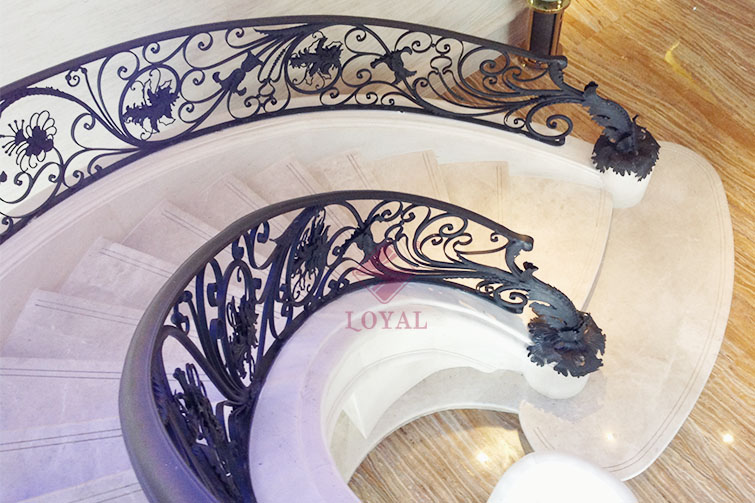
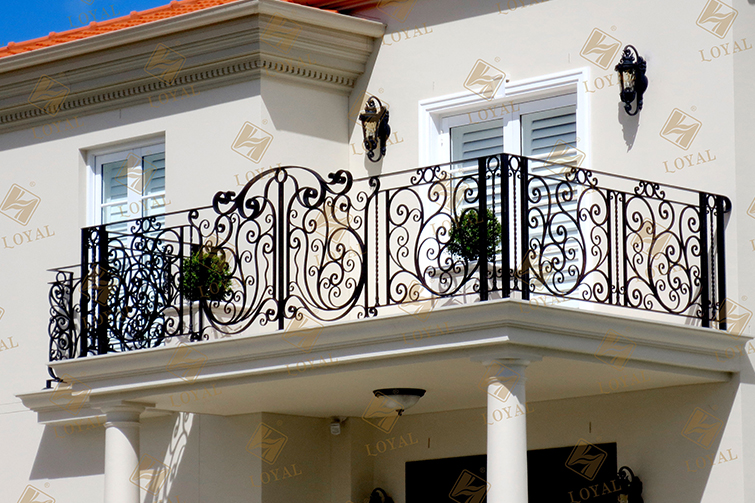
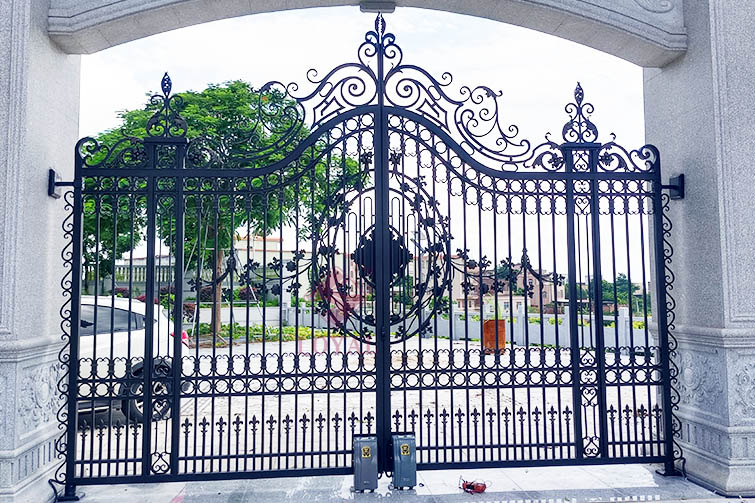
- Traditional/Classic: Features elaborate scrollwork, fleur-de-lis, spear points, and symmetrical, ornate patterns. Perfect for Victorian, Colonial, or Mediterranean homes.
- Modern/Contemporary: Emphasizes clean lines, geometric shapes (squares, rectangles), and minimalistic details. Horizontal bars, flat profiles, and a simple finish like matte black or charcoal gray are key.
- Rustic/Craftsman: Incorporates simpler forged details, hammered textures, and is often combined with natural materials like reclaimed wood or stone pillars.
- Custom Designs: For a truly unique gate, work with a fabricator to incorporate monograms, family crests, or thematic elements (e.g., vines for gardeners, marine motifs for coastal homes).
3. Evaluate Quality & Construction
This is where craftsmanship matters most. A gate is a long-term investment.
- Material & Weight: True "wrought iron" is hand-forged, but most modern gates are made from mild steel or commercial-grade steel. The metal should be substantial. Ask about the gauge (thickness). Lower gauge numbers mean thicker, stronger metal (e.g., 9-gauge is thicker than 12-gauge). A flimsy, lightweight gate will sag and fail.
- Joinery & Welds: This is the heart of durability. High-quality gates use full-penetration welds that are then ground smooth and clean. Look for seamless joins. Avoid gates with spot welds that look like blobs of metal; they are weak points. The best artisans often use traditional techniques like forge welding for critical joints.
- Frame Structure: A strong gate starts with a robust frame. Look for a continuous perimeter frame made from heavy square or rectangular tubing, with internal supports to prevent twisting.
- Hardware & Hinges: Never skimp here. Hinges must be heavy-duty, ball-bearing or strap hinges, sized proportionally to the gate's weight. They should be welded or through-bolted to the post. The latch and lock mechanism should be solid, weather-resistant, and smooth-operating. Consider self-closing hinges or an automatic opener if desired.
4. Focus on the Finish: Your Gate's Armor
The finish protects against rust and determines the final look.
- Powder Coating: The gold standard for durability. A dry powder is electrostatically applied and baked on, creating a uniform, chip-resistant layer far tougher than paint. It comes in endless colors (black, bronze, white, even custom matches). A high-quality powder coat should last 15-20 years with minimal maintenance.
- Liquid Paint/Primer Systems: A traditional multi-coat system with a rust-inhibitive primer and topcoat can be excellent if done correctly, but is generally less durable than powder coating in harsh weather.
- Wrought Iron Finish: For a classic, authentic look, some prefer the multi-step process of sandblasting, applying a black oxide finish, and sealing with a clear lacquer or wax. This gives a rich, dark matte look but may require more periodic upkeep.
- Galvanization: For ultimate rust protection (especially in coastal areas), gates can be hot-dip galvanized after fabrication, then powder-coated over the zinc layer. This is the most durable option.
5. Consider Installation & Technical Details
A poorly installed gate will never function well.
- Posts are Paramount: The gate is only as strong as what it hangs from. Posts must be set deeply in concrete footings below the frost line. For heavy double gates, a buried "deadman" anchor is often needed.
- Clearance & Swing: Ensure there is adequate clearance for the gate to swing open fully without obstruction. Decide on in-swing (into property, more secure) or out-swing (into street/sidewalk, may be required by code). The ground must be level.
- Automation: Plan for automation during the design phase. The fabricator needs to know to reinforce the gate for an opener's mounting bracket and to ensure it swings smoothly. Choose a gate opener compatible with the gate's size and weight.
- Building Codes & Permits: Always check with your local municipality regarding height restrictions, setback requirements, and whether a permit is needed, especially for front driveway gates.
Step-by-Step Selection Checklist:
- Measure & Assess: Accurately measure the opening and survey the site (slope, obstacles).
- Set a Budget: Include the gate itself, quality hardware, installation, and potential automation.
- Find a Reputable Fabricator: Look for experienced wrought iron or metal fabricators with a portfolio. Read reviews and ask for references.
- Review Detailed Quotes: Get written quotes specifying materials (gauge, steel type), construction methods, finish type (brand/quality of powder coat), hardware details, and installation.
- Ask for a Warranty: A confident fabricator will offer a warranty on both workmanship and the finish (e.g., 5-10 years on powder coating).
- Finalize Design: Approve a detailed drawing before fabrication begins.
Conclusion
Choosing a wrought iron gate is an investment in beauty, security, and property value. By prioritizing solid construction, heavy-duty hardware, a superior powder-coated finish, and professional installation, you ensure your gate will stand as a graceful and formidable guardian for generations. Remember, the cheapest option is often the most expensive in the long run due to repairs and replacement. Choose quality, choose craftsmanship, and enjoy the enduring elegance a well-made wrought iron gate brings to your home.