




How to Choose the Perfect Wrought Iron Stair Railing: A Comprehensive Guide
Wrought iron stair railings are a timeless choice, blending strength, artistry, and versatility. They can define the character of your home, ranging from classic and ornate to sleek and modern. However, selecting the right one requires careful consideration. This guide will walk you through the key factors to ensure you choose a railing that is safe, beautiful, and perfectly suited to your space.
1. Assess Your Style & Architectural Context
First, consider the overall style of your home.
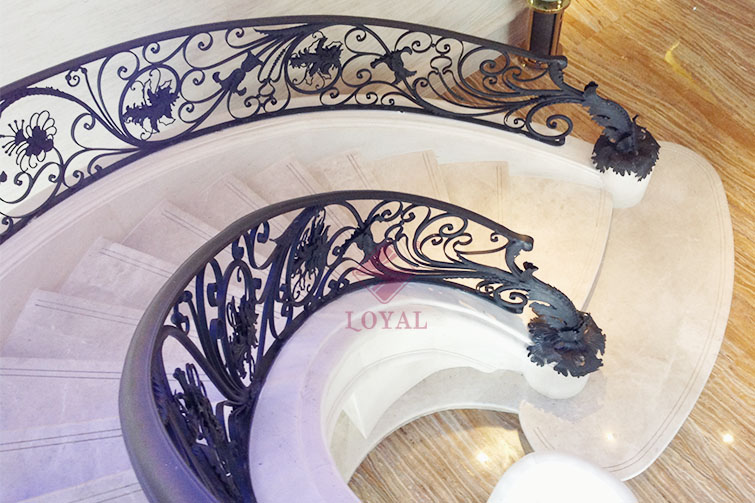
- Traditional/Classic Homes: Opt for railings with decorative elements like scrolls, finials, twisted balusters, or floral motifs. Look for hand-forged details for an authentic, artisan feel.
- Modern/Contemporary Spaces: Choose clean lines, minimalistic designs, and geometric patterns. Straight vertical balusters, horizontal cables, or simple square sections work best. A matte black or dark bronze finish is often preferred.
- Industrial Lofts: Consider railings with raw, textured finishes, incorporating elements like metal mesh, steel plates, or combining iron with wood.
- Rustic or Farmhouse Styles: Seek out designs with simpler curves, perhaps paired with a reclaimed wood handrail.
Tip: Your railing should complement, not compete with, your interior. Bring photos of your staircase and room to discussions with suppliers or designers.
2. Understand Key Quality & Construction Factors
The beauty of wrought iron is worthless without solid construction.
- Material & Craftsmanship: True "wrought iron" is hand-forged, but most modern railings are made from mild steel, which is more readily available and easier to weld. The key is thickness (gauge). A lower gauge number means thicker, stronger metal (e.g., 9-gauge is thicker than 12-gauge). For balusters (the vertical bars), 9-gauge to 12-gauge is common for residential use.
- Joinery: Examine how pieces are connected. Welded joints should be smooth, ground down, and free of gaps or splatter. High-end pieces may feature mechanical joinery (like mortise and tenon) for a seamless look. Avoid railings that seem poorly welded or wobbly.
- Finishing: This is critical for durability and aesthetics.Powder Coating: This is the industry standard for a reason. A dry powder is electrostatically applied and baked on, creating an extremely durable, chip-resistant, and uniform finish in virtually any color. It’s superior to traditional paint.Multiple Coats: A quality finish includes a phosphate pre-treatment (for rust inhibition) followed by the powder coat. For outdoors, ensure a robust primer is used underneath.
- Safety & Building Codes: Compliance is non-negotiable.Height: Typically, residential codes require railings to be 34-38 inches (86-96.5 cm) high from the stair tread nose.Baluster Spacing: The 4-inch sphere rule is universal: a 4-inch diameter sphere must not pass through any opening to prevent children from getting stuck or falling. Ensure all gaps, especially between balusters, adhere to this.
3. Choose Your Design Components
A railing is a system of parts. Consider each element:
- Baluster Design: This has the biggest visual impact. Choose from vertical, horizontal, or custom patterns.
- Newel Posts: These are the sturdy supporting posts at the start, end, and corners of a railing run. They can be simple or highly decorative anchor points.
- Handrail Profile: The handrail must be comfortable to grip. Common profiles are round, oval, or flat. It can be all-metal or feature a wood topper (like oak or mahogany) for warmth and comfort.
- Installation Method: How will it attach to your stairs?Surface Mount: Posts are mounted directly on top of the treads or floor. Easier for retrofits.Flush Mount/Inset: Posts are anchored into the stair structure itself for a cleaner, more integrated look, but requires more precise carpentry.
4. Practical Considerations: Budget, Space & Professionals
- Budget: Prices vary dramatically. Simple, stock designs are most affordable. Custom, hand-forged designs with intricate details are an investment. Remember to factor in installation costs, which can be significant.
- Space & Proportion: For a tight staircase, a simple design with thin balusters can maintain a sense of openness. A grand staircase can handle more substantial, ornate designs.
- Indoor vs. Outdoor Use: For exterior railings, specify a heavy-duty, weather-resistant powder coat finish (often polyester-based) and ensure all sealing points are watertight to prevent rust from inside.
- Hire the Right Professionals: For anything beyond a simple, pre-fabricated kit, consult with experienced metal fabricators, ironworkers, or specialized stair companies. They can provide custom drawings, ensure code compliance, and handle proper installation.
Step-by-Step Selection Checklist:
- Measure & Code Check: Confirm your stair dimensions and local building code requirements.
- Style Match: Collect inspiration images that match your home’s architecture.
- Get Quotes: Obtain detailed quotes from at least 2-3 reputable fabricators. Ask to see physical samples of their work and finishes.
- Review Details: Scrutinize the design drawing for gauge, spacing, joinery, finish type, and installation method.
- Ask About Timeline: Custom work can take 6-12 weeks for fabrication plus installation time.
- Get a Warranty: A reputable provider should offer a warranty on both materials and finish (e.g., a 10-year finish warranty is a good benchmark).
Conclusion
Choosing a wrought iron stair railing is a balance of art and engineering. By prioritizing quality construction, code-compliant safety, a durable finish, and a design that harmonizes with your home, you will invest in a functional piece of art that enhances safety, adds value, and defines the aesthetic of your space for decades to come. Take your time, do your research, and partner with skilled craftsmen to bring your vision to life.